

Article Contents
Thermal insulation in winter and summer: the impact on energy bills
Energy efficiency is a major concern for homeowners and commercial property owners in Portugal. With rising energy costs and increasingly hot summers, many people are looking for ways to reduce heating and air-conditioning consumption without sacrificing comfort.
Replacing old windows with modern uPVC windows with high thermal insulation can make a substantial difference to a building. Although windows account for only part of its external envelope, they can be responsible for a large share of heat loss.
Investing in efficient windows can significantly improve indoor comfort and reduce energy costs throughout the year.
Why windows have such an effect on energy consumption
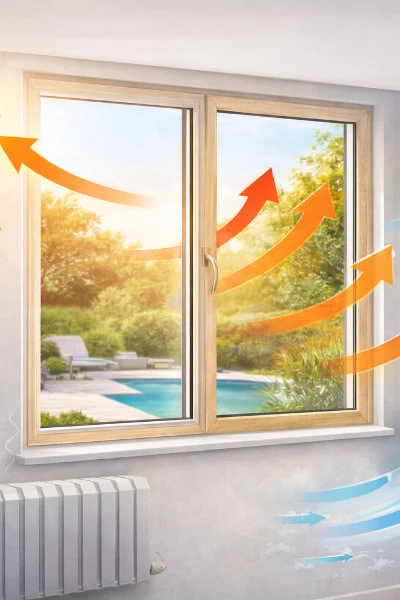
Windows form a direct boundary between the inside and outside of a building. Older or poorly insulated windows let heat escape in winter and allow excessive heat gain in summer.
Energy-efficiency estimates suggest that up to around 40% of a home’s heat loss can occur through its windows, depending on the building. This is particularly relevant where there are:
- single-glazed windows;
- old frames without thermal breaks;
- inadequate seals;
- metal profiles with high thermal conductivity.
The heating or cooling system then has to work harder to maintain a comfortable indoor temperature.
Replacing old windows with modern uPVC systems, insulating profiles and high-performance glazing substantially reduces heat transfer between indoors and outdoors.
How much could efficient windows save each year?
Technical examples for modern window systems illustrate how replacing old windows can deliver substantial savings.
For example, an illustrative scenario replacing windows around 15–20 years old (Uw ≈ 2.8 W/m²K) with modern windows rated at Uw ≈ 0.9 W/m²K gives approximate annual savings of:
- 1,203 litres of heating fuel;
- €1,143 in energy costs;
- 3,249 kg of CO₂ emissions.
Where the existing windows are older still, for example 30 years old or single glazed, savings can be greater. In some scenarios, the corresponding figures reach approximately:
- 2,723 litres of heating fuel saved per year;
- €2,587 in annual energy savings;
- more than 7 tonnes of avoided CO₂ emissions.
These figures are scenario-based examples, not a forecast for every home. Actual savings depend on property size, climate, the heating system and usage. They illustrate how efficient windows can have a measurable impact on energy bills.
Windows can account for up to around 40% of heat loss
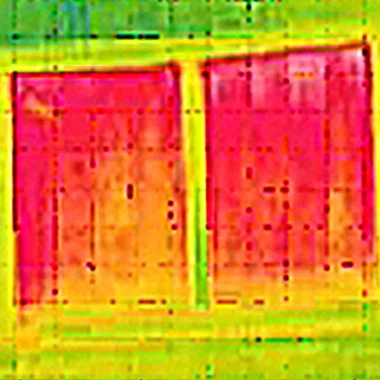
Old windows: greater heat loss
In this exterior thermal image, red, orange and yellow indicate warmer areas.
They show heat escaping from indoors through the glazing and frame.
The warmer the colour:
→ the greater the energy loss;
→ the poorer the thermal insulation.
In this example, the window shows:
- glazing with poor thermal performance;
- a poorly insulating frame;
- visible heat loss across the window opening.
The result: the home loses heat quickly, making the heating system work harder.

New efficient windows: lower heat loss
Green and blue predominate here, representing cooler exterior surfaces.
This indicates that:
- heat is being retained indoors;
- thermal insulation is effective;
- less heat is transferred outside.
Energy losses are much lower, including around the frame and glazing.
The result: the home maintains its indoor temperature for longer, using less energy.
How thermally insulating uPVC windows work
A window’s thermal performance depends on several components working together.
Multi-chamber uPVC profiles
Modern uPVC profiles contain several internal chambers that act as thermal barriers. The air trapped in these chambers helps reduce heat transfer between indoors and outdoors.
uPVC also has much lower thermal conductivity than materials such as conventional aluminium, contributing to better energy performance.
Double or triple glazing with insulating gas
Glazing is another essential component.
Modern windows commonly use:
- argon-filled double glazing;
- triple glazing for high-performance systems;
- low-emissivity (low-e) coatings.
This combination reduces winter heat loss and improves the home’s thermal insulation.
Quality seals and hardware
A good window also relies on effective hardware and sealing systems, such as Winkhaus hardware. Modern hardware creates more even closing pressure, improving airtightness and watertightness.
This reduces draughts and improves the window’s overall thermal performance.
Winter benefits: warmer homes and lower heating consumption
During colder months, efficient windows help keep heat inside the home.
With well-insulated windows:
- heat from radiators or heating systems stays indoors for longer;
- cold draughts are reduced;
- the indoor temperature remains more stable.
The heating system therefore needs to work less, delivering lower energy consumption and greater thermal comfort.
Summer benefits: less heat and reduced air-conditioning use
In summer, the challenge is reversed.
Solar heat can pass through glazing and quickly warm the interior. Many modern windows therefore use solar-control glass to reduce the solar energy entering the building.
For example, conventional glass might admit around 60% of solar energy, while a solar-control specification might reduce this to around 35%.
In this example, that means roughly 40% less solar heat entering through the glazing.
Illustrative summer air-conditioning savings in Portugal
When solar heat gain falls, the air-conditioning system needs less energy to cool the home.
For this illustration, solar gains through windows are assumed to account for around 25–45% of the cooling load.
If the glazing reduces incoming solar energy by approximately 40%, air-conditioning consumption could fall by around 10–19%, subject to the assumptions and system performance.
For a Portuguese house with moderate air-conditioning use, illustrative summer savings are:
Northern Portugal: Porto and the coast
Illustrative summer air-conditioning consumption:
400–700 kWh.
Approximate savings:
60–105 kWh per summer.
Lisbon and central Portugal
Illustrative air-conditioning consumption:
700–1,200 kWh.
Approximate savings:
105–180 kWh per summer.
The Algarve and warmer regions
Illustrative air-conditioning consumption:
1,200–2,000 kWh.
Approximate savings:
180–300 kWh per summer.
Using an assumed electricity price of approximately €0.28 per kWh, these reductions represent roughly €17–€86 per summer, depending on climate and air-conditioning use. This is an illustrative tariff assumption, not a current price quotation.
Although lower than the winter savings in the earlier examples, these reductions also help lower the home’s overall energy consumption.
Greater comfort and property appeal
Besides energy savings, efficient uPVC windows offer other advantages.
Key benefits include:
- better acoustic insulation;
- greater thermal comfort throughout the year;
- less condensation on windows;
- durability and lower maintenance;
- the potential to enhance property value.
Energy-efficient homes can be more attractive to buyers and investors, making window performance a relevant consideration in the property market.
Why choosing quality windows matters
Not all windows deliver the same performance.
For good results, consider:
- the quality of the uPVC profile;
- the glazing specification;
- the hardware and seals;
- professional installation.
Poor installation can compromise even the best window system.
Efficient window systems suited to Portugal’s climate
At Caixilho PVC, every project takes account of the property, its solar exposure and the local climate.
Available solutions include:
- uPVC windows with high thermal insulation;
- thermally insulating double glazing;
- solar-control glass for warmer climates;
- high-quality, corrosion-resistant hardware.
These systems can significantly improve comfort in homes and commercial premises while reducing energy consumption throughout the year.
An investment in comfort and lower running costs
Replacing old windows with efficient uPVC windows can be an important step towards a more energy-efficient home.
In the illustrative heating scenarios above, savings exceed €1,000 per year and approach €2,500 per year when replacing particularly old windows. Results for your property require an assessment of its starting condition, size, climate and energy use.
Homeowners can also benefit from:
- greater comfort in winter and summer;
- lower energy consumption;
- reduced outside noise;
- improved property appeal.
These benefits help explain why homeowners in Portugal choose to replace old windows with modern, high-performance systems.
✔ Would you like to improve the thermal insulation of your home or commercial premises?
The Caixilho PVC team can help you choose efficient windows for your project.
Request your free quote and discover how quality uPVC windows can make your home more comfortable.