

Article Contents
When choosing new windows for your home, the opening type is one of the most important decisions. It directly affects comfort, energy efficiency and everyday convenience.
uPVC windows are a popular choice for their durability, thermal insulation and low maintenance. But which opening system should you choose: sliding, tilt-and-turn or tilt-and-slide?
This guide explains the main differences, benefits and considerations for each option.
Sliding uPVC windows: convenience and space saving
If space is limited or you prefer a practical contemporary design, sliding uPVC windows can be an excellent option. Their sashes move horizontally along tracks without swinging into the room or outside.
Main advantages
- Suitable for smaller spaces: sideways opening avoids interference with furniture and does not require a swinging clearance.
- Easy operation: the sliding mechanism makes opening and closing straightforward.
- Contemporary design: a clean appearance suited to modern buildings.
Points to consider
Thermal and acoustic insulation: conventional sliding systems often seal less effectively than compression-sealed tilt-and-turn windows; performance varies significantly by system.
Airtightness and watertightness: correct specification and installation are essential to limit wind and water ingress.
When should you choose sliding uPVC windows?
They suit projects where space saving and practical operation are priorities, including balconies, kitchens and compact rooms.
Tilt-and-turn windows: insulation and versatility
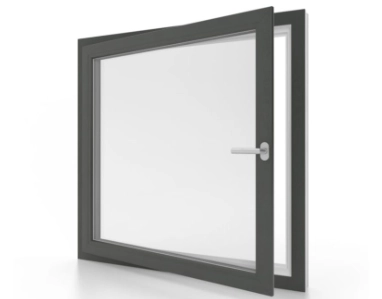
If thermal and acoustic insulation are your priority, tilt-and-turn windows are a strong option. They provide two opening modes:
Turn mode: the sash opens fully inwards for ventilation.
Tilt mode: the top tilts inwards for a smaller ventilation opening.
Why choose a uPVC tilt-and-turn window?
- Effective thermal and acoustic insulation: compression seals help maintain indoor temperatures and reduce outside noise when closed.
- Controlled ventilation: tilt mode provides air exchange without fully opening the sash.
- Flexible access control: appropriate restrictors and lockable handles can be specified where children or pets are present.
A tilted window is not inherently childproof or burglar-resistant. Tilt openings can be hazardous to pets, particularly cats; use suitable protection and supervision.
Points to consider
Indoor clearance: the inward-opening sash can conflict with furniture or curtains.
Specification and price: the dual-opening mechanism and chosen performance level affect the cost.
When should you choose tilt-and-turn windows?
They are well suited to homes requiring comfort, effective insulation and controlled ventilation.
Tilt-and-slide windows: combining sliding and tilt operation
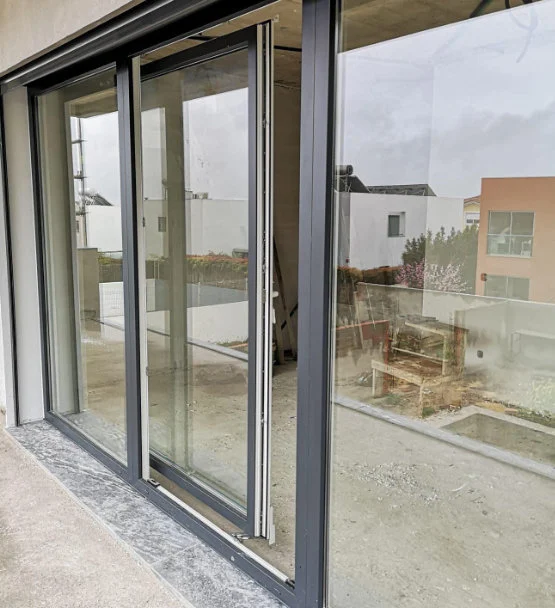
Tilt-and-slide windows combine sideways opening with a tilt ventilation position and compression sealing when closed.
You can slide the sash sideways to save swinging space or tilt it for ventilation.
Main benefits
- Strong thermal and acoustic performance: effective seals support indoor comfort.
- Two opening options: choose sliding or tilt ventilation according to your needs.
- Security options: suitable locking hardware can provide enhanced protection when closed and locked.
Do not assume that a tilted window retains its closed-position security rating. Check any specifically tested secure-ventilation feature.
Points to consider
Higher cost: the more complex mechanism can make this system more expensive.
Periodic maintenance: the hardware needs appropriate care and adjustment for smooth operation.
When should you choose tilt-and-slide windows?
They suit projects seeking a versatile, efficient system that combines sliding convenience with effective sealing.
Main differences: which option suits you?
The following overview compares typical characteristics. Performance, security and price always depend on the specific system, glazing, hardware and dimensions.
| Feature | Tilt-and-turn | Tilt-and-slide | Conventional sliding uPVC |
|---|---|---|---|
| Space saving when open | No: inward swing clearance needed | Yes | Yes |
| Thermal and acoustic insulation | High with suitable specification | High with suitable specification | Typically more limited; system-dependent |
| Dedicated tilt ventilation | Yes | Yes | No |
| Security | Depends on tested closed configuration | Depends on tested closed configuration | Depends on tested closed configuration |
| Ease of use | Straightforward | May take familiarisation | Straightforward |
| Price | Depends on specification | More complex hardware may increase cost | Varies widely by system |
Choosing the best window for your home
Once you understand the differences between sliding, tilt-and-turn and tilt-and-slide uPVC windows, consider your particular priorities:
- for convenience and space saving, consider sliding windows;
- for effective insulation and flexible opening, consider tilt-and-turn;
- for sliding operation combined with tilt ventilation, consider tilt-and-slide.
All three can offer the durability, efficiency and low-maintenance benefits of uPVC when correctly specified and installed.
If you need help or a tailored quote, speak to a specialist to find the right system for your project.