
Article Contents
- Quick answer: what should you look for?
- 1. Choose a stable, correctly sized profile
- 2. Assess glazing by solar factor, insulation and natural light
- 3. Specify hardware suited to humidity and salt-laden air
- 4. Check airtightness, watertightness and wind resistance
- 5. Choose colours and finishes suited to strong sunlight
- 6. Match opening styles, ventilation and shading to how the home is used
- 7. Give installation the same importance as the profile and glazing
- What if the home is right beside the sea?
- Other practical questions about windows in the Algarve
- Replacing windows in a home in the Algarve?
- Technical sources consulted
Technical guide for homes in the Algarve
Choosing the right window for the Algarve starts with its location
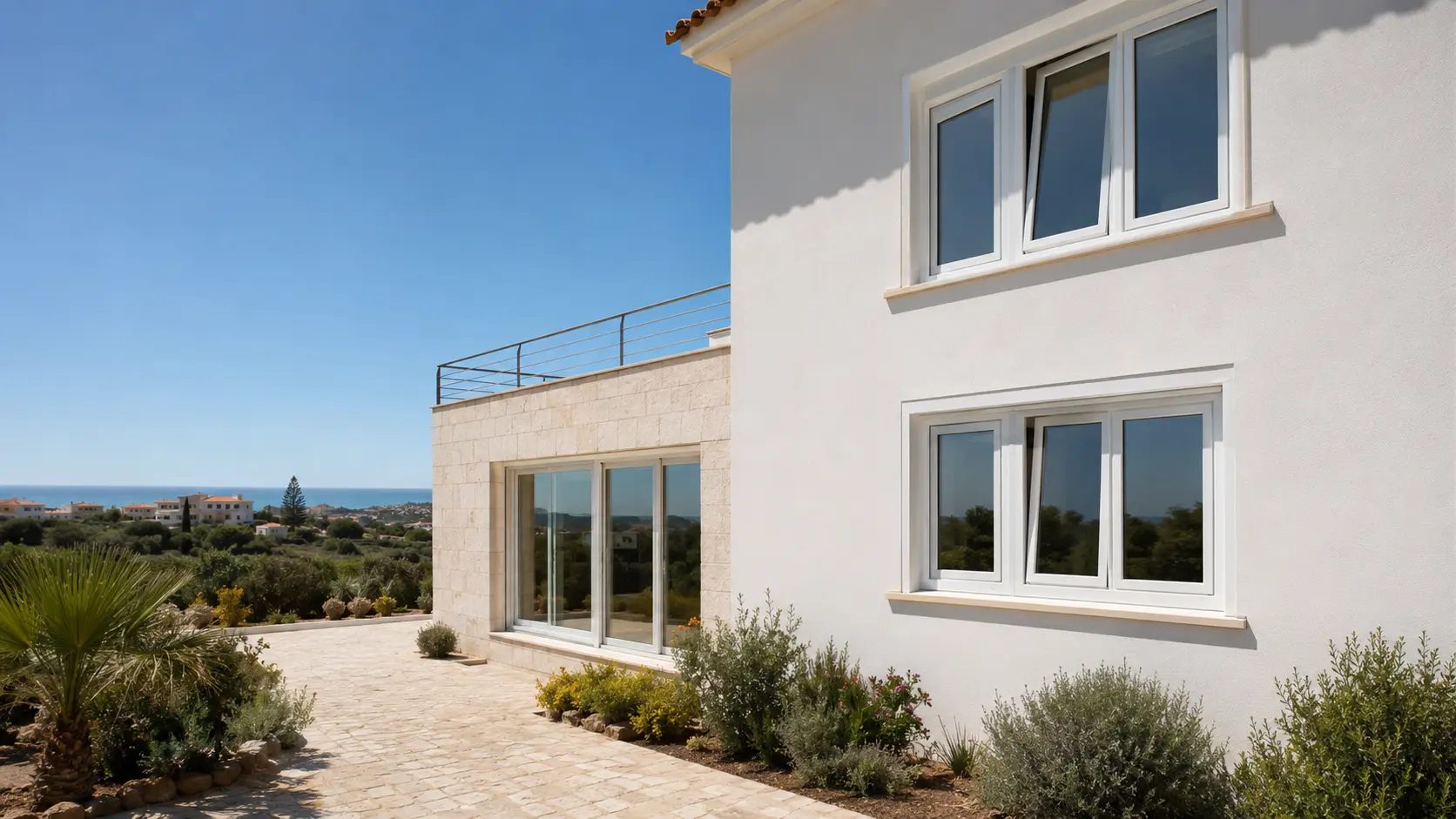
Intense sunlight, heat-exposed façades, humidity and, near the coast, airborne salt particles change what is required of a window system. Specify the profile, glazing, hardware and installation as one system rather than as isolated components.
Choosing windows for a home in the Algarve involves more than deciding between uPVC and aluminium or comparing the number of chambers. Actual performance depends on the combination of façade orientation, opening size, distance from the sea, wind exposure, how the property is used and installation quality.
A permanent home in the inland Algarve does not have exactly the same needs as a seafront apartment or a holiday home left closed for weeks. That is why the Caixilho PVC team in the Algarve assesses each project before recommending the profile, glazing, hardware and opening style.
Quick answer: what should you look for?
- A profile sized for the dimensions and weight of each opening;
- glazing chosen for solar orientation, not just the number of panes;
- hardware with suitable protection against humidity and coastal exposure;
- good performance for airtightness, watertightness and wind resistance;
- colours and finishes approved for strong sun exposure;
- installation that provides correct alignment, fixing, drainage and perimeter sealing.
Why does the Algarve climate need its own assessment?
The Algarve combines long sunshine hours, prolonged high temperatures and an extensive coastline. On west-facing façades, late-afternoon solar gains can significantly raise indoor temperatures. Near the sea, humidity and salt deposits accelerate wear on metal components without suitable protection.
There is no single ‘Algarve climate’. A home in the barrocal, a house sheltered by neighbouring buildings and a property directly exposed to the Atlantic or Ria Formosa face different conditions. Each façade should therefore be assessed separately. Some openings need to limit solar energy gains; others need to preserve natural light, improve wind-tightness or increase corrosion resistance.
The 7 criteria for choosing windows for the Algarve climate
1. Choose a stable, correctly sized profile
uPVC is particularly useful in humid and coastal environments because the profile does not rust and needs little maintenance. However, two uPVC windows can perform very differently. System depth, chamber number and geometry, reinforcement, seals, sash dimensions and glazing weight should all be considered together.
A deeper profile is not automatically necessary for every opening, just as a simpler system may be unsuitable for a large door. The Aluplast uPVC window range, for example, includes 70 and 85 mm solutions for different performance levels. Aluplast Ideal 7000 has an 85 mm depth and six chambers, but the final decision should consider the whole project, not just the profile data sheet. For other configurations, explore Aluplast’s 76 and 85 mm NEO systems; suitability for the climate and exposure always depends on the complete solution.
A useful question for the supplier: are the proposed system and reinforcement sized for this particular opening’s width, height, glazing weight, colour and opening style?
2. Assess glazing by solar factor, insulation and natural light
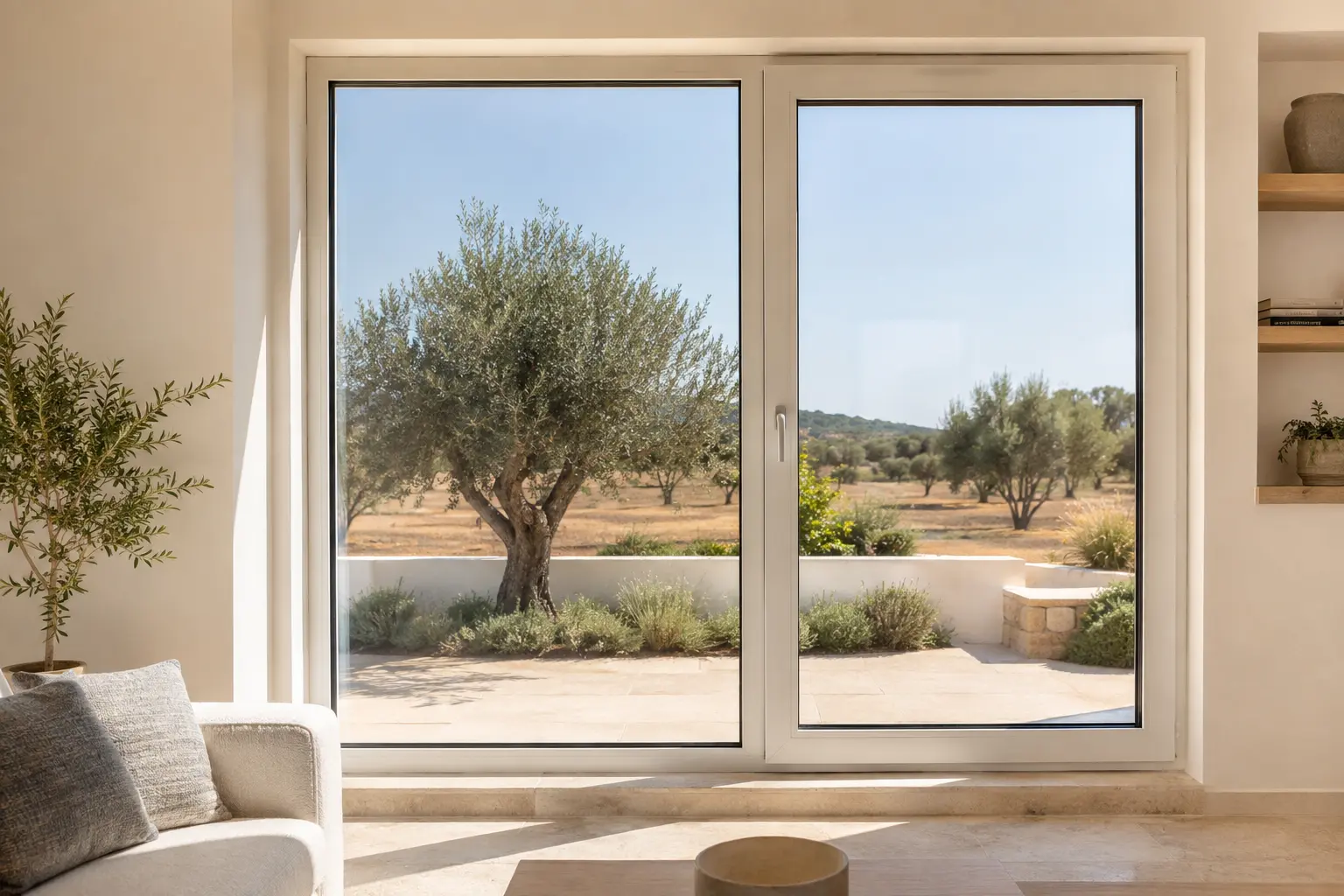
On the most exposed façades, glass makes up most of the window and plays a decisive role in overheating. Double glazing with solar control can limit the solar energy passing through the glass while still admitting plenty of daylight. Do not choose glass solely because it looks darker or more reflective.
Three values are particularly important:
- Solar factor (g-value): the proportion of solar energy entering the building. A lower value generally offers greater protection against solar heat gain.
- Light transmission: how much visible light passes through the glass. Good design aims to reduce heat without unnecessarily darkening the room.
- Ug-value: the thermal transmittance of the glazing. A lower value means better thermal insulation through the glass.
For large south- or west-facing openings, solar control may matter more than simply adding a third pane. On less exposed façades, overly selective glazing can reduce natural light without a proportionate benefit. Overhangs, shutters and external shading should also form part of the assessment.
3. Specify hardware suited to humidity and salt-laden air
Although the uPVC profile does not rust, the hardware contains metal components and is one of the most vulnerable parts in coastal environments. Hinges, locks, pins, screws and sliding mechanisms need a surface treatment appropriate to their level of exposure.
Winkhaus, for example, offers specific finishes for demanding environments, recommended by the manufacturer for coastal regions and humid spaces. In practice, asking for ‘corrosion-resistant hardware’ is not enough: confirm the system and finish included in the quotation. See also Caixilho PVC’s guide to Winkhaus window hardware.
On seafront properties, combine this protection with regular fresh-water cleaning and the care recommended by the manufacturer. Salt deposits affect more than metal: they can build up in tracks, drainage areas and seals, impairing operation if left in place.
4. Check airtightness, watertightness and wind resistance
A window may have a good thermal rating yet still allow air or water infiltration if the system, seals or installation are unsuitable. In exposed locations, check the performance of the complete assembly for air permeability, watertightness and resistance to wind pressure.
These properties are especially relevant to unsheltered façades, tall buildings and homes near the sea. Continuous seals, even closing pressure and clear drainage channels help maintain performance over time. The required classes depend on building height, location and exposure; there is no single correct value for every project.
5. Choose colours and finishes suited to strong sunlight
Dark colours normally absorb more radiation than white and can reach higher surface temperatures. This does not mean giving up anthracite, black or wood effects. The solution is to use profiles, decorative foils and reinforcement approved for that configuration and respect the manufacturer’s size limits.
Aluplast, for example, uses Cool-Colors technology in its decorative foils to limit profile overheating in direct sunlight. Even so, colour, orientation, sash size and exposure should be assessed together. Our guide to uPVC window colours and finishes helps compare popular appearance options.
6. Match opening styles, ventilation and shading to how the home is used
Opening style affects sealing, ventilation, usable space and ease of maintenance. A tilt-and-turn window allows controlled ventilation and tends to close with high pressure against the seals. Sliding systems save interior space, but the choice should reflect the required level of weather sealing. For large openings, tilt-and-slide, Smart Slide or lift-and-slide systems can offer different performance.
In holiday homes, it is also important to plan safe ventilation while the property is closed. Consider micro-ventilation, tilt-and-turn openings, vents or ventilation systems without compromising security or weather sealing. External shading — roller shutters, hinged shutters, overhangs or pergolas — acts before sunlight reaches the glass and can be decisive on exposed façades.
7. Give installation the same importance as the profile and glazing
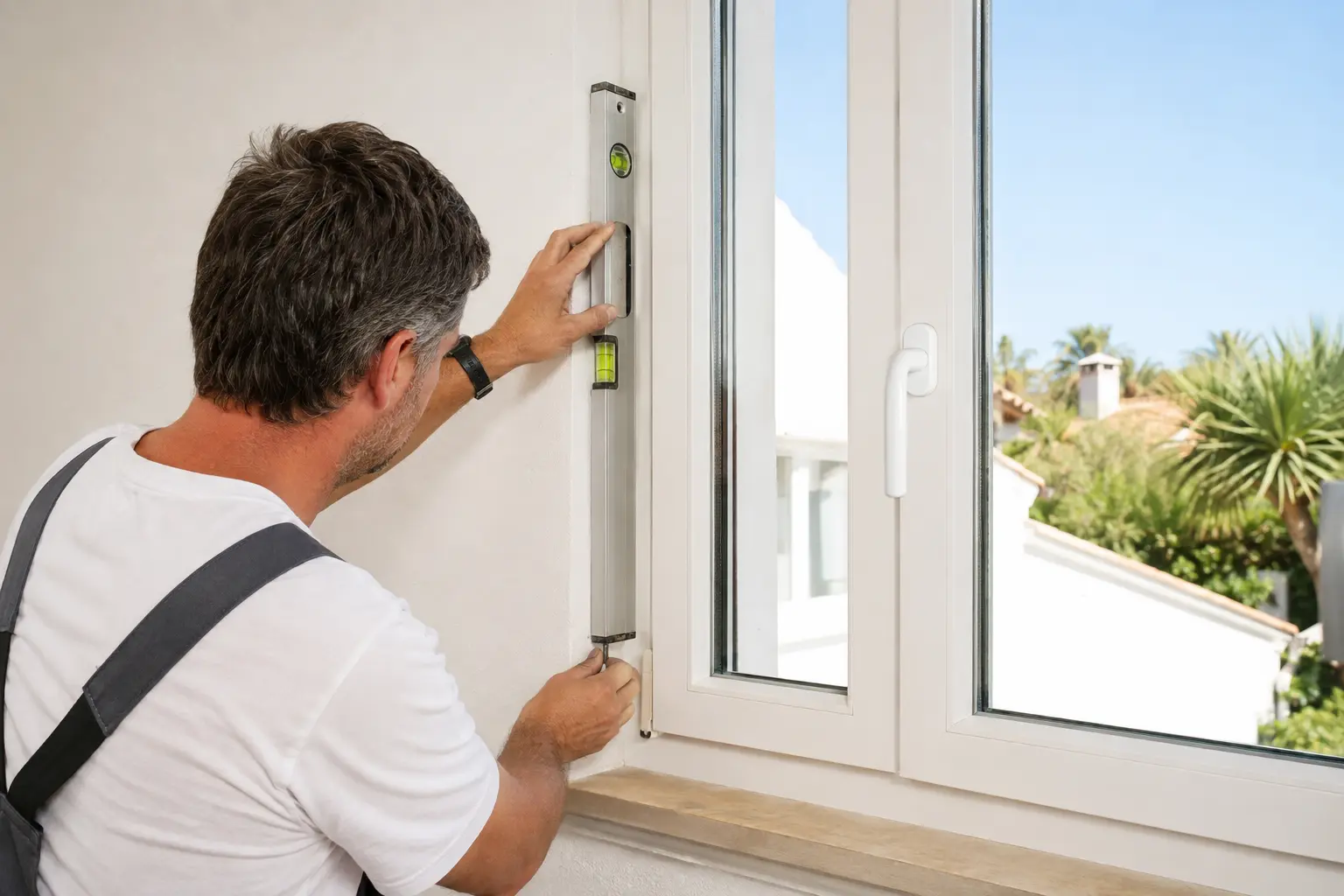
A window’s declared performance assumes correct installation. Poor fitting can cause draughts, water leaks, operating problems, thermal bridges and stress in the frame. Check the opening, align and plumb the frame, distribute fixings correctly and seal the perimeter joint with compatible materials.
Sills, thresholds and drainage points deserve special attention on façades exposed to wind and rain. Polyurethane foam, where used, must not remain exposed and does not by itself replace a complete sealing system. Finally, adjust the hardware, test the locks and explain how the window should be cleaned and maintained.
Which solution makes sense in each part of the Algarve?
The following table provides an initial guide. Distance from the sea, building height, façade shelter and solar orientation can make one building more demanding than another in the same town.
| Location or exposure | Main risks | Specification priorities |
|---|---|---|
| Inland Algarve and barrocal | Heat, UV radiation and temperature fluctuations | Glazing matched to orientation, an approved finish, shading and ventilation |
| Urban coastal area | Sun, humidity and occasional salt deposits | Protected hardware, good seals, drainage and regular maintenance |
| Seafront | Intense salt exposure, wind and accelerated corrosion | A coastal specification, highly protected hardware, weather sealing and more frequent cleaning |
| South- or west-facing façade with large openings | Overheating and glare | An appropriate solar factor, good light transmission and external shading |
| North-facing or sheltered façade | Lower solar gains and possible humidity | Insulation, daylight and ventilation, avoiding excessive solar control |
What if the home is right beside the sea?
For projects with high coastal exposure, explore the Maritime uPVC range for beach houses and coastal homes, which combines profile, glazing and hardware solutions that can be adapted to the exposure of each project.
Checklist for requesting comparable quotations
To receive a technically suitable proposal and compare options clearly, provide or ask the supplier to record:
- the location and approximate distance from the sea;
- the orientation of the main openings and existing shading;
- the approximate width and height of each window or door;
- the preferred opening style and how the room is used;
- the proposed profile system, depth, seals and reinforcement;
- the glazing composition, Ug-value, solar factor and light transmission;
- the hardware brand, system and finish;
- the interior and exterior colours;
- the installation method, finishing details and treatment of sills;
- warranties, recommended maintenance and expected lead time.
For examples of completed installations, view the company’s uPVC window and door projects. Photographs and project descriptions help illustrate differences in opening styles, colours and dimensions.
Recommended maintenance in coastal areas
uPVC windows need little maintenance, but ‘little’ does not mean ‘none’, especially by the sea. Increase cleaning frequency as direct exposure to salt-laden air increases. In general, remove salt, sand and dust with fresh water and a mild cleaning product, clean tracks and drainage holes, check seals, and lubricate moving parts only with compatible products recommended by the manufacturer.
Avoid abrasive products, solvents and tools that might scratch profiles, glass or hardware. If a sash begins to rub, the handle becomes stiff or water starts to enter, arrange a technical inspection rather than forcing the mechanism.
Frequently asked questions about windows in the Algarve
Does uPVC withstand salt-laden air?
The uPVC profile does not rust and is well suited to humid environments. However, a window includes hardware, screws and other metal components that need appropriate corrosion protection. In highly exposed locations, regular cleaning to remove salt deposits remains necessary.
Is triple glazing always better for the Algarve?
No. Triple glazing can improve thermal insulation in certain configurations, but it does not solve overheating on its own. On façades with strong sun exposure, solar factor, light transmission, shading and orientation can be more decisive. The glazing specification should therefore be calculated for each opening.
Does solar-control glass have to be dark or highly reflective?
No. Neutral-looking selective glazing can reduce solar energy transmission while maintaining good daylight levels. Confirm its appearance, solar factor and light transmission before ordering.
Other practical questions about windows in the Algarve
What is the best window colour for a home in the Algarve?
There is no single ideal colour. White tends to absorb less heat, while dark colours require foils, profiles and reinforcement suited to strong sun exposure. The choice should balance architecture, orientation, dimensions and the manufacturer’s specified conditions.
Is standard hardware suitable for a seafront home?
Not always. Salt exposure can accelerate corrosion. Confirm that the hardware has a surface treatment suitable for coastal environments. The specification should cover hinges, locks, screws and other components, supported by appropriate maintenance.
Does installation affect heat and insulation?
Yes. Gaps, misalignment or incomplete seals can allow air infiltration and reduce the performance of the complete assembly. Correct installation provides the connection between the window and wall, preserves drainage and allows the hardware to close evenly against the seals.
Replacing windows in a home in the Algarve?
Send the approximate measurements, location, façade orientation and distance from the sea. Caixilho PVC will prepare a solution suited to the property’s exposure and how it is used.
Technical sources consulted
Caixilho PVC checked the technical information in this guide against manufacturers’ documentation: Aluplast IDEAL 7000, Aluplast Cool-Colors foils, Press Glass solar-control glazing and Winkhaus protection for extreme and coastal environments. Always size and specify the final solution for the building and actual site conditions.